

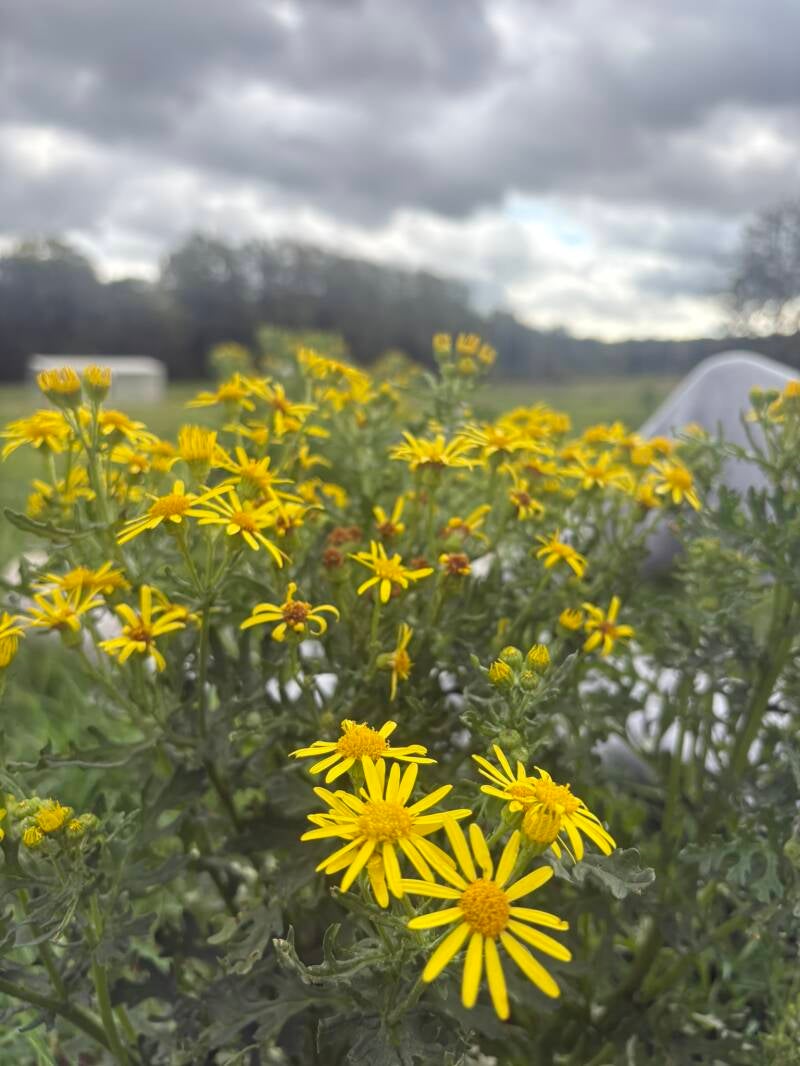
What is the Common Ragwort?
Common ragwort (Jacobaea vulgaris, formerly Senecio jacobaea) belongs to the daisy family, Asteraceae. It is native to Europe and parts of Asia, and has become an invasive weed in Australia, New Zealand, North America and Argentina. It goes by many names, including stinking willie, Staggerwort and benweed, and in North America it is known as tansy ragwort.
It is typically a biennial: it forms a low rosette of leaves in its first year and flowers in its second. Flowering runs from roughly June to November in the UK, peaking in July and August, and in milder spots it can carry on into early winter.
Where can you Find it?
Ragwort thrives on disturbed ground, so you'll often see it on grassland, roadsides and wasteland. In countries where it is an invasive weed, three insects have been introduced to keep it in check: the cinnabar moth, the ragwort flea beetle and a seed-head fly. The flea beetle has been the most effective so far.
Spotting the Common Ragwort
Although formerly classed as Senecio Jacobaea, it belongs to the daisy family (Asteraceae). Growing to 30-150cm tall, with dense, flat-topped clusters of bright yellow, daisy-like flowers. The leaves are a dark green, with a more ragged look, in its first year it forms a low rosette. It can regrow if cut, however, not if uprooted.
Tiny Travellers: How Ragwort Seeds Spread
A single plant can produce tens of thousands of seeds, with estimates reaching as high as 150,000. Each plant produces two types of seed. The inner (disc) seeds have a fluffy tuft called a pappus, which lets them drift on the wind. Most land nearby, though strong winds can carry some much further. The outer (ray) seeds have no pappus and drop close to the parent plant, where they can lie dormant in the soil for years. This is why ragwort can reappear long after the original plant has died.
Seeds also hitch lifts on animals, clothing, machinery and vehicle tyres, and water carries them along ditches and streams. Contaminated hay, feed and soil are the likely routes by which ragwort reached North America, Australia and elsewhere.
Poison and Pollinator: The Two Faces of Ragwort
Ragwort is a wildlife powerhouse. It supports around 70 invertebrate species in Britain, roughly 30 of which depend entirely on it. It is also a valuable late-season source of nectar for bees, butterflies and hoverflies. The black and orange striped caterpillars of the cinnabar moth feed on it and absorb its alkaloids, which makes them taste foul to predators.
But ragwort is also highly toxic. It contains pyrrolizidine alkaloids, which damage the liver. Horses and cattle are most at risk, because the damage is cumulative and largely irreversible, while sheep and goats are far more resistant. Animals usually avoid the fresh plant because it tastes bitter, but the alkaloids stay toxic when it is dried in hay or silage, and in that form, it is much more palatable and easily eaten without notice. For humans the risk from casual contact is low, though trace alkaloids can end up in honey and herbal products.
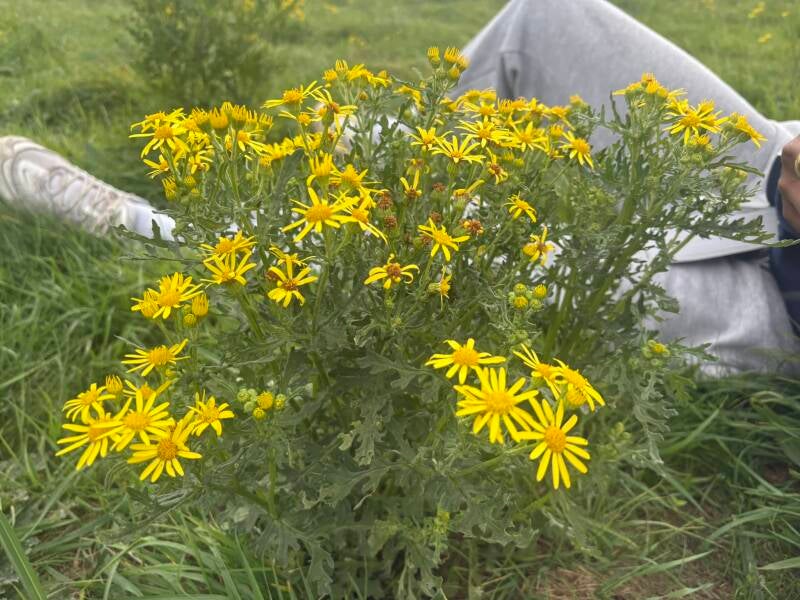
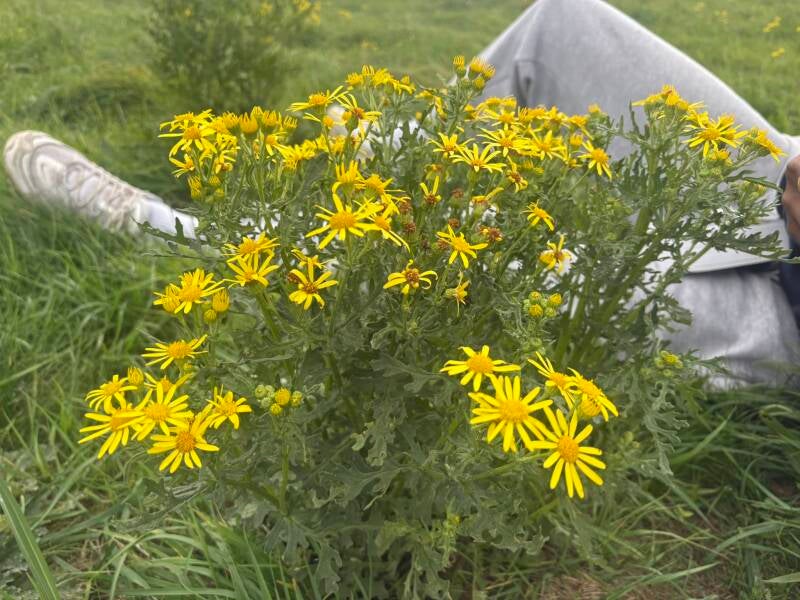
What the Law Says
Ragwort is one of five "injurious weeds" listed in the Weeds Act 1959. It is not illegal to have it growing, but landowners can be required to control it where it threatens grazing land or hay production. The Ragwort Control Act 2003 and its Code of Practice cover this too. The rules differ across the UK, so check the guidance for your own country.
So, Villain or Hero?
Both, and where it grows matters. On a roadside verge or nature reserve, ragwort is a lifeline for insects. In a horse paddock or hay meadow, it needs to go. If you do need to remove it, pull it before it sets seed, wear gloves, take as much root as you can, and dispose of it carefully, because wilted ragwort is more palatable to livestock.
Create Your Own Website With Webador